|
This was a time when, for example, a
speakerphone for an AT&T Merlin was a $300 add-on box, so some people felt that
AT&T prices were too high, rather than Asian phones were not high enough; but AT&T
convinced the Feds to apply huge punitive "anti-dumping" duties on most
Asian-made business phone systems.
This would have approximately tripled the
price of Panasonic phones, and quickly kill their business. But Panasonic isn't stupid.
They set up KX-T assembly lines in Britain, first in Birmingham, England, and then in
Cwmbran, Wales. And since Great Britain is not in Japan or China, Panasonic escaped the
penalty, and thumbed their noses at AT&T.
There were product shortages for several
months, but in the end, the new assembly lines started pumping out products and Welsh-made
Panasonic prices were pretty close to the previous prices from Japan.
If you get a Panasonic phone system in
California, some of it could have traveled from China to Japan to Wales to
Panasonic US HQ in New Jersey to a Panasonic regional warehouse to a wholesale distributor
to a dealer to you, rather than simply crossing the Pacific.
Voice Processing Systems are apparently not
subject to the anti-dumping duty, and they are made in Japan. Consumer phone
products are made in several countries.
Some time in 2001, we
believe, the anti-dumping duty expired, but Panasonic in the US is happy
with the phones from Wales, and will keep getting its phones from there.
|
While it seemed stupid and wasteful to
external observers, Panasonic apparently thought it would make more money by having two competing groups
making and selling business phone systems, instead of one group. Even though Panasonic had
to finance multiple factories, sales teams, engineering groups, repair facilities, websites,
warehouses, ad programs, public relations staffs, and even trade show exhibits, it must be
the right decision, or they wouldn't do it. Right?
Before the Federal punitive duty mentioned
above, both Panasonic phone groups made their phones in Japan, and what are now marketed
as DBS phone systems had product numbers beginning with VA, like the infamous VA-208, the
first Panasonic-brand key system sold in the U.S. At that time, the U.S. Panasonic
catalogs included both KX-T and VA products, but in almost every case where there were
competing VA and KX-T products, the VA stuff looked weird (like
trimline-style phones with touch-tone pads on the back, not front) and lacked features (like auto-busy-redial).
VA consumer telephone products and
multi-line phone systems were removed from the US market in about 1990.
After the duty was imposed and KX-T moved
to Britain, VA moved to VA (Virginia, that is), and started selling DBS products with VB
part numbers. DBS/VB had limited success, and the American DBS operation shut down
at the end of March, 2003. Some DBS products continued in production in
Japan, and are distributed in the US by Abrivo Communications.
 KX-T in
Canada KX-T in
Canada
Since Canada is a former member of the British
Commonwealth of Nations, you might expect that their KX-T products would come from
Britain. Nope. Canada has no anti-dumping duty on Japanese phone systems, so most or all
Canadian KX-T products are made in Japan. Canada had the KX-TD digital systems before the
US did, but they get cordless phones after the US.
 Around the world Around the world |
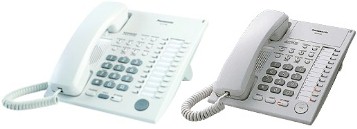
Both
of these phones are the KX-T7720. The one on the left, sold in the
USA, has 24 programmable buttons. The phone on the right, sold in
other countries, has just 12 programmable buttons. In the USA, the
phone comes in white or charcoal; elsewhere you can get gray or
charcoal. |
Both of these phone system control units are the KX-TA308. The box on
the left was scheduled to be sold in the USA in early 2004, with a new
series of phones based on the KX-T7700 series. It is equipped for 3
lines and 8 phones, and can't be expanded. It is the first Panasonic
hybrid system designed to use phone company voicemail. The box
on the right is sold outside the USA, and is basically the same as the
KX-TA624 sold in the USA. It is initially equipped for 3 lines and 8
phones, and can expand to 6 by 24. |
 Both of these phone system control units are the KX-TDA30. Both of these phone system control units are the KX-TDA30.
The
picture at top-left is the connection panel of the KX-TDA30 sold in
Germany. The lower picture is the TDA30 sold in England.
The English version has a cover over its
SD slot, and a jack in the top right where the German version has a
filler panel. The Panasonic logos are in
different positions. The English version uses 8-pin "RJ-45" jacks.
The German version uses narrower "RJ-11" jacks.
The German version has jack labels
printed in English. The English version has jack labels printed in
German. NO, we're just kidding. The English version doesn't have
labels near most of the jacks. Apparently, you have to provide your
own. |
|
|
|
The phone on the left is the
KX-TD7690, sold in Canada and the US. The similar KX-TD7590 is
sold in other countries. |
 |
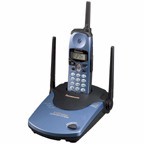
| The no-display KX-TG2500
above was
available in blue in Canada, but not in the US. On this side
of the big border, we had the blue 2550 (below), which
was not sold in
Canada. There was also a blue 2570, apparently sold only at
Circuit City. |
 |
|
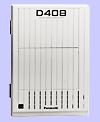 The German KX-TD408 is pretty much
the same as the American KX-TD816. The German KX-TD408 is pretty much
the same as the American KX-TD816. |
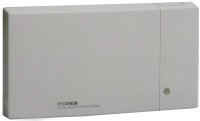
 This is a KX-TD208, available in
Britain, Germany,
Spain, and probably other
countries. |
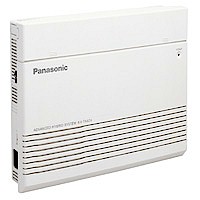
In the USA, this is the KX-TA624. In Russia, it's the KX-TA308RU or KX-TA616RU. In
Latin America, it's the KX-TA308/616.
The KX-TA308 sold in the USA is not the same as the KX-TA308
sold in other countries. |
|
- KX-TD systems sold in Australia and in
Europe, were able to be connected directly to ISDN lines
long before American systems could.
- The KX-TD412 system sold in
Denmark can handle 4 ISDN lines, with up to 4 digital and 8 analog phones.
- Britain has a digital cordless phone system
("DECT"), operating in the 1880-1900MHz range. Multiple DECT handsets can be
connected to the same system. Users can make and receive internal and external calls from
anywhere on the premises (within range of any of the strategically positioned base
stations).
- Germany has an ISDN-ready KX-TD208,
and a KX-TD408, in addition to the KX-TD1232 sold elsewhere.
- The KX-TD208 is also sold in the U.K. It comes configured with one
ISDN2 line (2 channels) to connect directly to digital lines. Two additional ISDN2
channels can be connected, for direct connection to devices such as video telephones,
Group 4 facsimile machines and ISDN2 compatible high-speed modems, to ensure speedy and
efficient data transfer. It also enables faster connection to the Internet, which offers
its own vast range of information and services. MSN (Multiple Subscriber Numbering) and
DDI (Direct Dialing In). Each KX-TD extension is able to be called easily by having its
own direct dial telephone number.
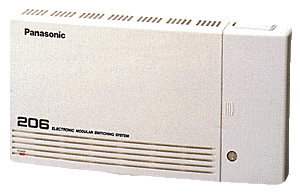
- A small analog KX-T206
is sold in Europe and Latin America and possibly other areas, but not in North America. It
can handle two lines and six phones, with two intercom paths; and has some advanced
features like fax detection and DISA that were adapted for the new KX-TD308.
- There are at least two versions. KX-T206SBX
has one hybrid port and five single-line telephone ports. KX-T206HBX has six hybrid ports.
A hybrid port accepts either a proprietary or single-line telephone. KX-T206SBX does not
have a Door Opener Interface. Intercoms are numbered starting with 21, like the XDPs
on the D308. Connections for phones and door phone are with "DDK" jacks. I don't
know what they are.
- The KX-T96
was the forerunner of the KX-T336. As mentioned
above, the US Government put a big punitive tariff on small phone systems from Japan, so
KME moved some production to the UK to avoid the tariff. Also, the 96 was upgraded to the
336, so that it would no longer be considered a small system, and could escape the tariff
even if made in Japan. Most of the circuit modules for the 336 have part numbers starting
with "96," revealing their heritage. The 96 was sold in many countries (Canada,
Hong Kong, New Zealand, etc.), where there was no protective tariff. I think it has been
discontinued. The KX-TD500 is sold in several versions around the
world. Outside the US, it's similar to the old KX-T336. The US version
is more like a big KX-TD1232.
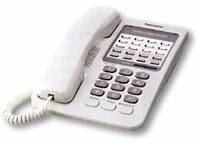 The KX-T7300
series of analog multi-line phones was available for several years in several countries, before
it came to the US. The
KX-T7320 is a non-display speakerphone with 12 CO buttons. The KX-T7330 is a display
speakerphone with 12 CO buttons. The KX-T7350 is a non-display monitor phone with
12 CO buttons. The KX-T7310 is a single-line phone with message/ringing lamp. The KX-T7315
is a single-line speakerphone with message/ringing lamp. The KX-T7300
series of analog multi-line phones was available for several years in several countries, before
it came to the US. The
KX-T7320 is a non-display speakerphone with 12 CO buttons. The KX-T7330 is a display
speakerphone with 12 CO buttons. The KX-T7350 is a non-display monitor phone with
12 CO buttons. The KX-T7310 is a single-line phone with message/ringing lamp. The KX-T7315
is a single-line speakerphone with message/ringing lamp. |
- The Latin-American KX-TA308-616
is almost identical to the American KX-TA624.
- There are often many
variations of Panasonic phone products for different countries, with
different features and different firmware, and different programming software. I've
learned of at least two dozen versions of the KX-TD1232.
- For the US market, KX-TD digital phones come in
all-cardboard cartons, but KX-T7000 series analog phones were packed in Styrofoam
inserts inside cardboard cartons. Anyone know why?
- A number of modules for the digital systems are unavailable
in the US, including the KX-TD174 for 16 single-line
phones.
Footnotes
in KX-T history
- KX-T7900 four-line
900MHz cordless was announced in September, 1993, but apparently never marketed. Up to
eight of the handsets were supposed to work with the KX-T336900 interface unit, which
connected to the phone system control unit. The 7900 was a flip-phone design, with a
16-character LCD display.
- The original design for the KX-T7220
non-display digital speaker phone had 12 programmable buttons. When the phone was
marketed, it had 24 buttons, like the 7230.
- The eXtra Device
Port was originally called the Multi-Access Port.
- KX-T2140 was the first KX-T
"system" phone. It was a modified version of the KX-T2220 (Panasonic's first
generation feature phone, from around 1987) with some of the one-touch dialing buttons
dedicated to system features. It was used with the original KX-T616 control unit -- a PBX,
rather than a hybrid like the later models.
- KX-T30825 was a transitional phone,
sold for a short period around 1990 at the same time as the first generation of hybrid
phones. It had a more modern styling, like VA-series phones of that period and later 7000
series phones.
- KX-T123235 was a rare black version
of the KX-T123230 that had off-hook call announce. You might expect that
the black version of the KX-T61630 would be the 61635. NOPE, its the
KX-T61631. We have one
in the AbleComm
Museum.
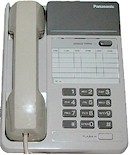 |
- KX-T7051
was a single-line
phone with message-waiting lamp, produced for the 336 system around
1994. After a long search, we got two for the museum.
We'll sell one
for your museum.
|
When I find
out more, you'll see it here
Michael N. Marcus, AbleComm Chief Geek
. Reader contributions are
welcome.
| How to decode KX-T model numbers KYUSHU MATSUSHITA ELECTRIC CO., LTD - COMMUNICATIONS DIVISION
( EXAMPLE )
KX - F 2130 BX
(1) (2) ( 3 ) (4)
(1): ABBREVIATION OF KYUSHU MATSUSHITA ELECTRIC COMPANY'S PRODUCT.
(2): CATEGORY OF PRODUCTS AS FOLLOWS:
T: TELEPHONE EQUIPMENT /ANALOG PBX
TC: CORDLESS PHONE
TCD - Dect cordless
TG: GigaRange cordless phone
TM: ANSWERING MACHINE
TD: DIGITAL PBX
F: FACSIMILE MACHINE
G: MARINE PRODUCT
A: ACCESSORY/OPTIONAL ITEM
J: ACCESSORY/OPTIONAL ITEM
(3): MODEL NUMBERS
(4): SUFFIX TO INDICATE COUNTRY WHERE PRODUCT IS MARKETED
AG ARGENTINA
BX ASIA, MIDDLE EAST AREA
AL AUSTRALIA
AR AUSTRIA
BE UNITED KINGDOM
BL BELGIUM
BR BRAZIL
C CANADA
CN CHINA
CX - Czech Republic
DM DENMARK
CE EAST EUROPE
E - United Kingdom
FL FINLAND
FR FRANCE
G GERMANY
GR GREECE
HG - Hungary
HK HONG KONG
ID INDONESIA
JT ITALY
LA LATIN AMERICA
ML MALAYSIA
MX MEXICO
NL NETHERLANDS
NZ NEW ZEALAND
NW NORWAY
PD - Poland
PR PORTUGAL
RU - Russia
SN SINGAPORE
SA SOUTH AFRICA
SP SPAIN
S SWEDEN
SL SWITZERLAND
TR or TK - Turkey
TW TAIWAN
TH THAILAND
TK TURKEY
(no suffix) USA
Some suffix variations are not covered above. The final "D" in
KX-T123211D indicates a major product revision, and until recently answering machines and
cordless phones did not have special suffixes. "X" can be used to indicate
worldwide or multi-country distribution.
|
|
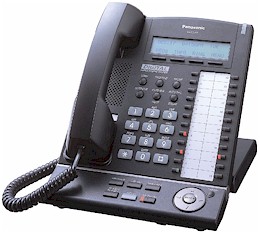




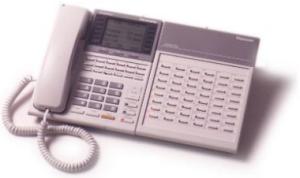
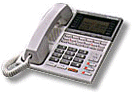
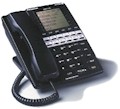 This
is a Panasonic "DBS" phone, made in the USA and sold
worldwide. The US DBS operation was closed in 2003. Some models
are still made in Japan, and distributed in the US by an
independent company.
This
is a Panasonic "DBS" phone, made in the USA and sold
worldwide. The US DBS operation was closed in 2003. Some models
are still made in Japan, and distributed in the US by an
independent company.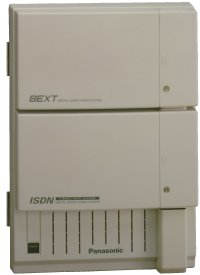
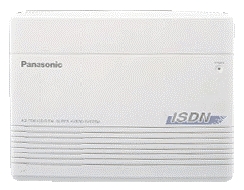
 This ISDN module is available in Germany.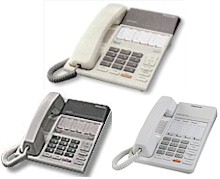
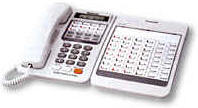 Here's an
analog KX-T7330 display
phone and a KX-T7340 DSS/BLF. The 7340 was available in lots of countries, but not the
Here's an
analog KX-T7330 display
phone and a KX-T7340 DSS/BLF. The 7340 was available in lots of countries, but not the