Spread Spectrum technology was co-invented by actress Hedy Lamarr during World War II,
to help direct American torpedoes at Nazi battleships, without them getting jammed and
sent off-course. More recently,
Spread Spectrum was combined with digital technology, for spy-proof and noise-resistant
battlefield communications, and great cordless phones. For more on Spread
Spectrum, see the Center for Wireless
Telecommunications at Virginia Polytechnic Institute
and Spread Spectrum
Scene magazine |
|

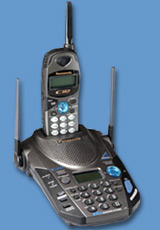
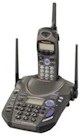
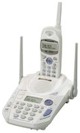
Diversity antenna systems
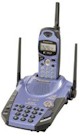
are incorporated in the Panasonic GigaRange Extreme phone
bases. This technology, used for wireless microphones in concerts as
well as in mobile radio equipment, incorporates two antennas mounted
in different locations. With two antennas, there is a better chance
that one will receive a clear signal. A circuit inside the phone
base automatically chooses the better signal, so you get the best
communication possible. |
|

Digital Voice Processing:
Generally speaking, the farther away from the base a digital voice
transmission must be sent, the more errors that can occur and hurt
the sound quality. Panasonic 2.4 GHz GigaRange® Extreme phones
feature advanced error correction software that helps maintain
signal integrity at greater distances for high quality sound. |
|

Digital Duplex Speakerphone
circuitry helps reduce the echo and dropout effects, which are
common in conventional speakerphones, for more natural-sounding
conversations.
|